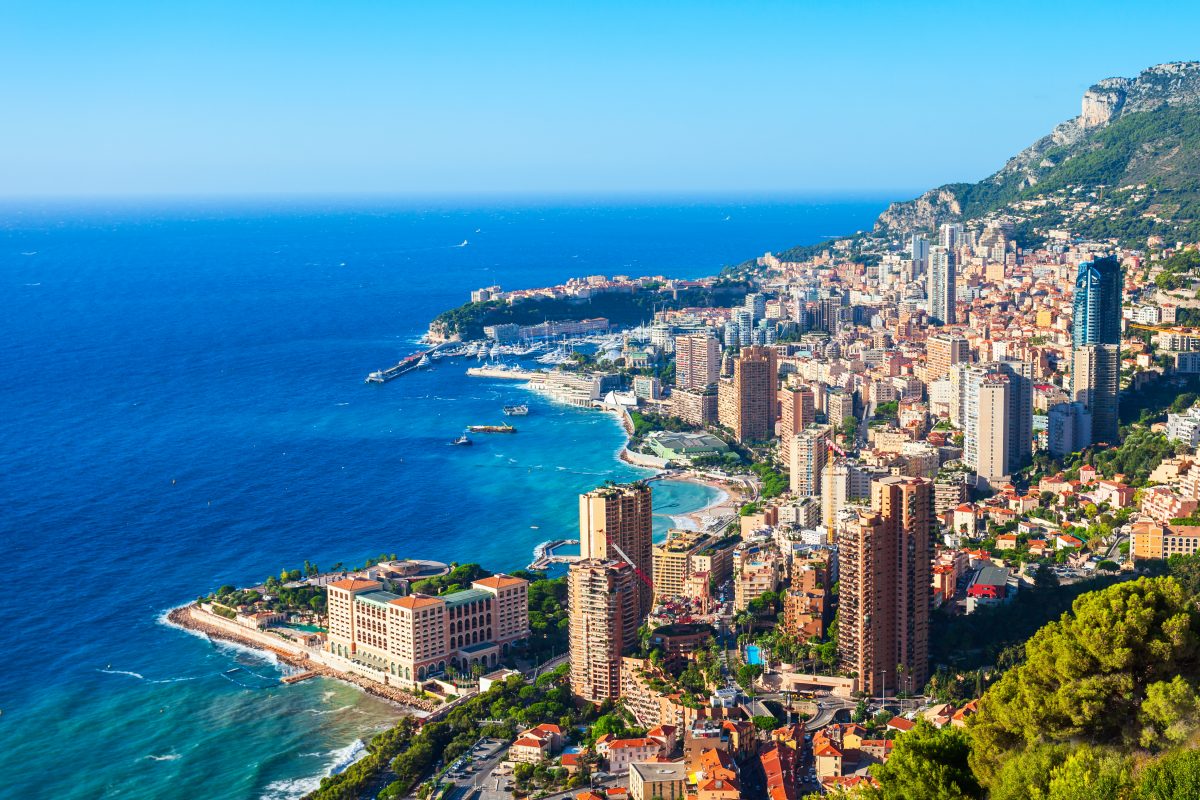
The Principality of Monaco
With €170 billion in assets managed by 25 banking institutions and 71 asset management companies, the Principality of Monaco is a first-class international financial center. Its strengths include moderate taxation and information confidentiality, all while actively participating in the fight against money laundering and terrorism.

Moderate Taxation
For Individuals: Monegasque taxation is distinguished by the absence of direct taxation (no income tax, capital gains tax, property tax, or housing tax…).
However, this rule does not apply to French nationals who cannot prove 5 years of residence in Monaco as of October 31, 1962, as they remain subject to French taxation.
For Businesses: No direct tax is levied on industrial or commercial companies that generate more than 75% of their turnover within the Principality.
Companies established in Monaco that do not meet this criterion are subject to a tax on profits. The applicable tax rate is 33.33%.

Confidentiality
The directors and staff of financial institutions established in the Principality are subject to professional secrecy. Failure to comply with this secrecy is punishable by the penalties set forth in Article 308 of the Penal Code.
Information covered by secrecy includes details on operations, particularly wealth management, as well as the existence, functioning, and balance of bank accounts.
However, as in all countries with an organized financial system, professional secrecy cannot be invoked against the supervisory bodies of the Monegasque banking system and Anti-Money Laundering authorities—which are themselves bound by professional secrecy—nor against the Monegasque judicial authorities acting in the context of criminal proceedings.

The Fight Against Money Laundering and Terrorism
The Principality of Monaco has long pursued an active policy in the fight against organized crime, money laundering, and the financing of terrorism.
To this end, the legislation is regularly strengthened and has been favorably evaluated on several occasions by the relevant international bodies:
FATF (Financial Action Task Force on Money Laundering)
MONEYVAL (Council of Europe)
IMF (International Monetary Fund)